‘Metafiction’ can be defined as any storytelling that is aware that it is fictitious and spells it out to the reader. Instead of pretending to be an account of true events, it comments on how the narrative is constructed to create meaning.
From structural choices to self-aware narrators, metafiction can challenge readers to consider additional levels of storytelling and interpretations. In this article, we’ll look at the defining characteristics of metafiction, so that you’ll be better at spotting it or using it in your own writing.
Let’s break down that fourth wall.
Stories that know they’re stories
At its most basic level, we know that a story is metafictional when it openly acknowledges that it’s fictional. The narrator may address the reader directly, comment on the act of narration, or remind us that what we’re reading is just a reconstruction of events, not an account of any sort of reality.
Italo Calvino’s If on a Winter’s Night a Traveler is one of the most famous examples of metafiction in literature. It announces its metafictional leaning already in the first sentence:
You are about to begin reading Italo Calvino's new novel, If on a winter's night a traveler. Relax. Concentrate. Dispel every other thought. Let the world around you fade.
Throughout the novel, Calvino repeatedly addresses the reader and reminds them of the fact that they are indeed reading a story. This adds another dimension to the story, as readers have to both consider the story at face value and what Calvino is trying to achieve by adding this metafictional level.
Slaughterhouse-Five by Kurt Vonnegut is another famous example of metafiction. The novel explores the fire bombing of Dresden, drawing from Vonnegut’s own, real life war experiences. Though not as in-your-face, it is just as deliberate as Calvino’s take on the form:
There is no beginning, no middle, no end, no suspense, no moral, no causes, no effects. What we love in our books are the depths of many marvelous moments seen all at one time.
Besides this quote, Vonnegut inserts himself into the narrative at multiple occasions, blurring the line between author and character. There’s constant self-referencing, which allows him to deliver his critique of other war literature and film in a subversive way.
Self-awareness vs. metafiction
In metafiction, the self-awareness goes beyond a merely chatty or opinionated narrator. A few fourth-wall jokes or asides don’t automatically make a work as a whole metafictional unless they prompt the reader to reflect on storytelling itself. The difference is intention: metafiction uses self-reference to interrogate how narratives work, not just to sound clever.
Take The Book Thief by Markus Zusak, for instance. Narrated by death, this popular novel may seem metafictional at first. Death frequently breaks the fourth wall, just like a metafictional narrator would. He provides footnotes, asides, and explanations that make him seem more human and brings the reader closer to the story.
However, Death never breaks the fourth wall in order to comment on the structure or act of storytelling itself. The book never reflects on itself as fiction, meaning it’s not metafictional.
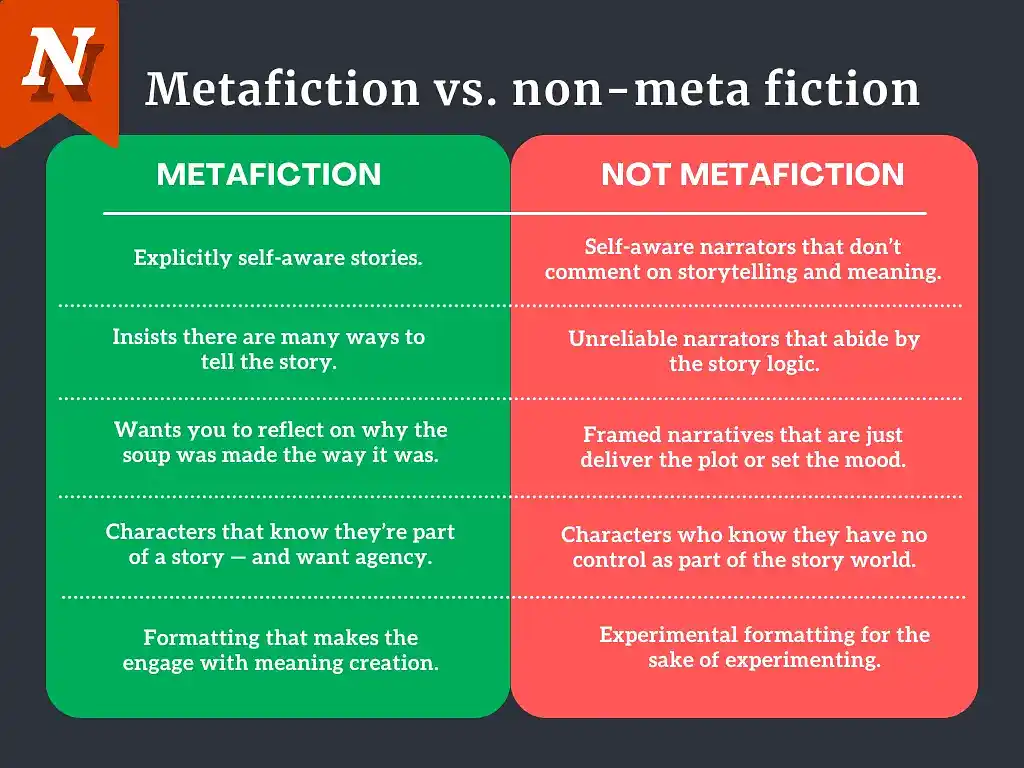
Here’s a helpful graphic comparing metafiction to non-metafictional stories:
Other examples of books that may appear to be metafictional but are not include:
- A Series of Unfortunate Events: The intrusive narration and many warnings to the reader feel self-aware, but the story doesn’t ask the reader to interrogate storytelling as a construct.
- Fight Club: The narrator’s awareness is psychological, not metafictional; the novel never acknowledges its own fictional status.
That leads us to the second defining characteristic of metafiction.
Storytelling as a theme
The point of metafiction is to make the reader reflect on storytelling itself. Because of this, interpretation and the creation of meaning is almost always a central theme in any metafictional novel.
Think of it as watching a play. If we sit in the front row and focus only on the scenery and actors, we might forget that the story is not real. But if we sit in the back-row, we might spot some of the mechanics of the show — whether lighting fixtures or the ropes holding the set in place. Of course, even the people up front know that they’re just watching a play, but for all intents and purposes, the illusion remains intact. For the people at the back, however, being one step removed allows them to enjoy the story on stage while also being reminded that it is indeed just a story. 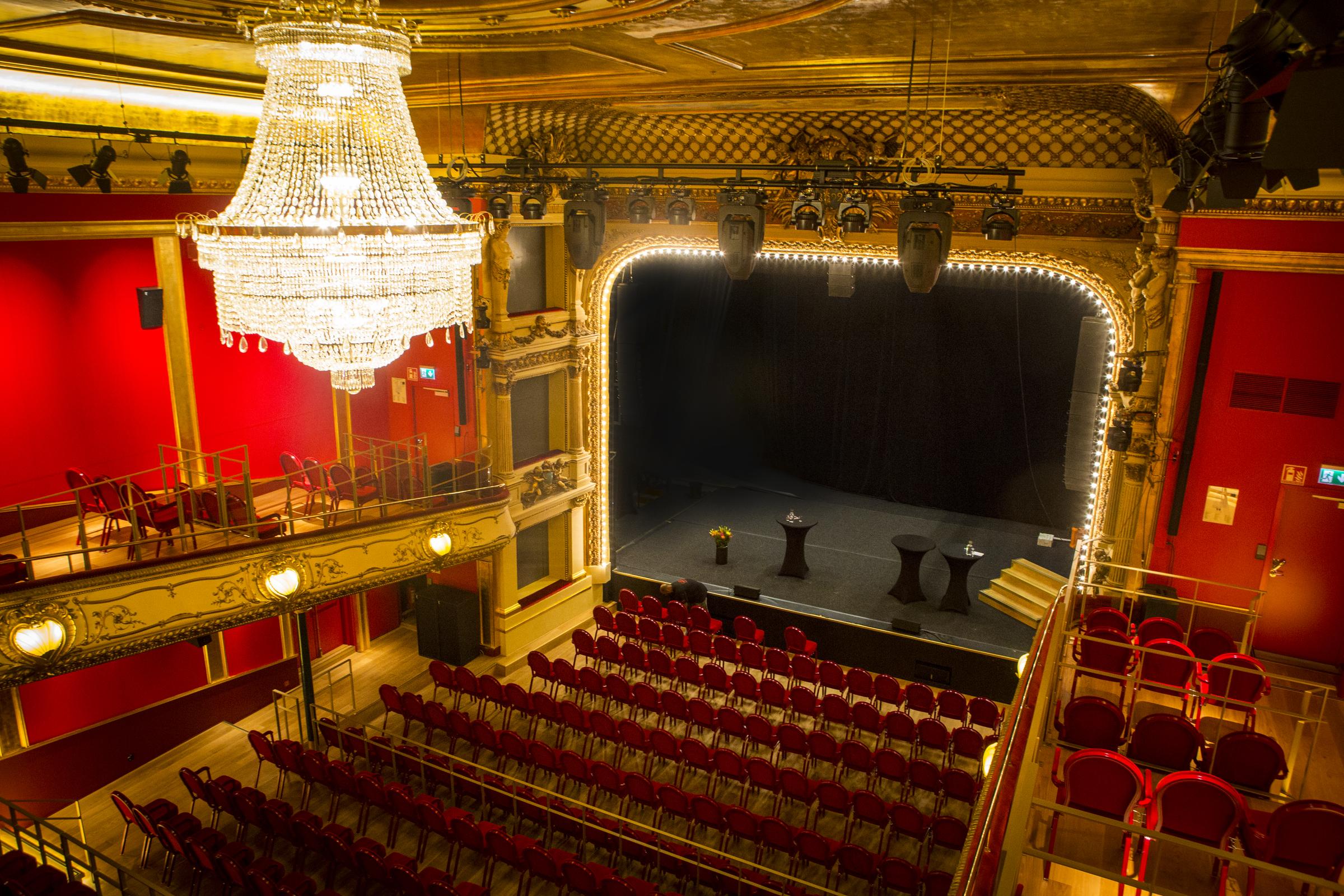 Metafiction exposes these mechanics on purpose. They want the reader to juggle two things at once: the story, on the one hand, and seeing how the sauce is made (and how this impacts the flavor) on the other.
For example, In Pale Fire — a novel presented as a 999-line poem written by the fictional poet John Shade — the narrator Charles Kinbote advises readers to refer back to his commentary before, during, and after reading the poem itself. Kinbote’s notes call attention to the structure of the story and making the poem almost secondary to the commentary that surrounds it:
Let me state that without my notes Shade’s text simply has no human reality at all since the human reality of a poem such as his (being too skittish and reticent for an autobiographical work), with the omission of many pithy lines carelessly rejected by him, has to depend entirely on the reality of its author and his surroundings, attachments and so forth, a reality that only my notes can provide. To this statement my dear poet would probably not have subscribed, but, for better or worse, it is the commentator who has the last word.
Kinbote claims that Shade’s poem has “no human reality at all” without his notes. He positions himself not as a guide, but as the source of meaning, insisting that context and commentary override the text itself.
Crucially, the line “it is the commentator who has the last word” reveals the novel’s metafictional core: stories don’t end with authors, but with whoever controls their interpretation.
Similarly, Life of Pi foregrounds the reader’s role in choosing how to interpret the story:
Pi Patel: 'So tell me, since it makes no factual difference to you and you can't prove the question either way, which story do you prefer? Which is the better story, the story with animals or the story without animals?'
Mr. Okamoto: 'That's an interesting question?'
Mr. Chiba: 'The story with animals.'
Mr. Okamoto: 'Yes. The story with animals is the better story.'
Pi Patel: 'Thank you. And so it goes with God.
Here, Pi isn’t asking which story is true in a factual sense, but which one the listener will choose to believe. The final line — “And so it goes with God” — extends that logic beyond the novel, suggesting that belief itself is about what stories we find most convincing.
Framed stories vs. metafiction
Metafiction always consists of at least one framing device. With that said, not every book that contains a story within a story is metafiction. Framing devices like diaries, transcripts, oral histories, or “found” documents only become metafictional when the text itself reflects on how that frame shapes meaning or interpretation. If the frame functions purely as a mechanism to deliver the plot, the story remains conventional.
Much of gothic literature includes framing devices. This does not make them metafictional. Take Dracula, for instance. Stoker uses letters and journals to heighten realism, not to question storytelling itself. The reader may ask themselves how this impacts the story, but the story never explicitly asks them to.
Similarly, Frankenstein uses frames to add perspective and tension, not to comment on fiction as fiction. And again, Wuthering Heights includes two framing narratives: those of Lockwood and of Nell.
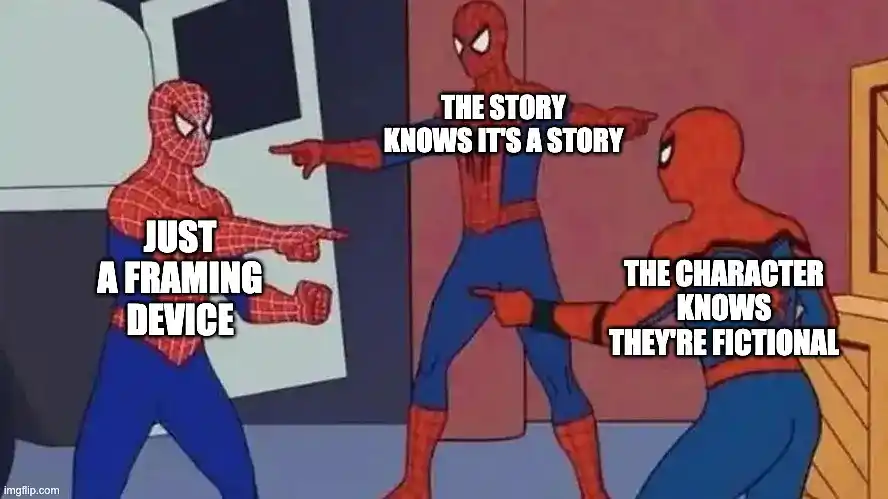
Author intent is questioned
In metafiction, the reader is always invited to question why the story was written a certain way. So in this sense, they have to think of the many layers of storytelling, from the words on the page to the intention of the author.
Instead of presenting a single, definitive version of events, the story relies on choice. Multiple endings, competing truths, or visible authorial decisions remind the reader that the story could have unfolded differently. Meaning isn’t handed down decisively but shaped in collaboration between author, text, and reader.
In The French Lieutenant’s Woman, for example, the narrator famously offers multiple endings and pauses to reflect on the artificiality of authorial control. By doing so, the novel refuses to pretend that any single resolution is inevitable. This stands in contrast to the Victorian realism it initially appears to mimic.

Similarly, The Princess Bride layers a fairytale with an invented editorial persona who abridges, interrupts, and comments on the “original” text. Here, authority is split between storyteller, editor, and reader, turning authorship itself into part of the narrative joke.
Unreliability vs. metafiction
It’s easy to confuse this kind of instability with other narrative tricks. But a shocking reveal, hidden information, or a dishonest narrator doesn’t automatically make a story metafictional. An unreliable narrator operates inside a stable narrative system; metafiction exposes the system itself. Generally, mystery and thriller novels built around twist endings rely on withheld information, not on exposing the author’s hand or the integrity of the narrative.
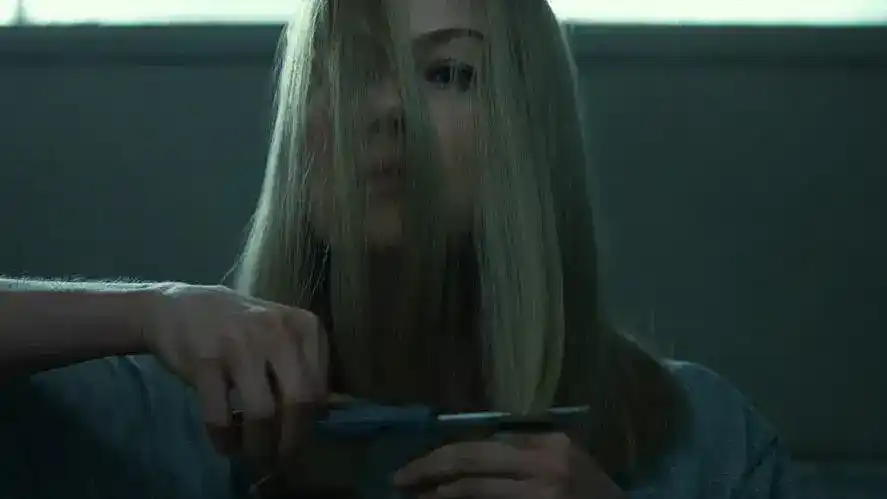
In Gone Girl, author Gillian Flynn uses unreliable narration to great effect, but never veers into metafiction. The reader understands the main character Amy Dunne as unreliable, but the logic of the story world remains intact. The reader ends up questioning the authority of Amy Dunne, not how reliable Gillian Flynn is — or how the different parts of the book come together to create meaning.
Characters demanding agency
In some metafiction, self-awareness doesn’t stop at the narrator, but includes the characters too. These characters become aware that they are part of a story and that their fate is being manipulated or constrained by an authorial hand. With this awareness, they may resist the roles they’ve been assigned or speak to the reader, questioning the logic governing their world.
The effect is not just playful, but philosophical: the story invites readers to think about how characters are shaped by plot, genre, and authorial choice.
Take The Truman Show, for instance. In this 1998 movie, Jim Carrey plays Truman Burbank, who gradually realizes his entire life is a constructed reality TV show. He lives on a set, and all of the people he knows are paid actors. As Truman becomes aware that he is being controlled by the showrunners, he tries to take back control of his life. It’s often described as light metafiction: the story isn’t about fiction per se, but it makes the audience acutely aware of performance, authorship, and constructed reality.

Chosen ones vs. metafiction
Stories about prophecy, destiny, or “chosen ones” often flirt with similar ideas, but they don’t automatically cross into metafiction. In most cases, fate operates as an in-world force, not as a narrative constraint the characters recognize as artificial. Metafiction is when characters explicitly recognize narrative rules as constraints imposed by an authorial hand, not the circumstances of their world or a divine being from within the story.
Katniss Everdeen, for instance, is repeatedly forced to take action by the circumstances she finds herself in, not by choice. But all of these constraints take place within the logic of Panem. Propaganda, spectacle, and destiny are political tools, not narrative ones. Katniss never recognizes herself as a character in a story, nor does the novel ask the reader to reflect on her narrative fate as an artificial construct.

Active use of formatting
In metafiction, typography, footnotes, and structure can be more than just decorative flourishes; they can actively help shape interpretation. The form becomes inseparable from the content, asking readers to engage not just with the narrative but with the physical and structural experience of reading it.
House of Leaves by Mark Z. Danielewski uses this metafictional tool effectively. Through footnotes, shifting fonts, and unconventional page layouts the formatting mirrors the novel’s obsession with interpretation and instability.
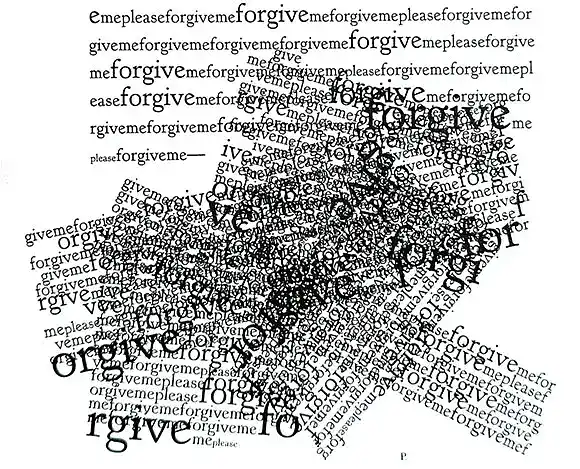
Repeating the word “forgive” in spirals across the page makes obsession and mental collapse physically visible to the reader. You don’t just read the character’s distress, you experience it as your eyes struggle to find order.
Crucially, the layout in House of Leaves also slows the reader down. It interrupts the momentum of the story, making the reader conscious of the act of reading itself. That friction makes the form metafictional: the book refuses to let you forget that meaning is constructed, unstable, and deeply tied to how a story is presented, not just what it says.
Stylistic experimentation vs. metafiction
Using formatting to create a metafictional level isn’t the same as stylistic experimentation. Experimental layout or fragmented structure only becomes metafictional when it draws attention to the act of reading or to the mechanics of storytelling itself, rather than serving as a purely aesthetic choice.
A clear contrast is A Visit from the Goon Squad. The novel’s fragmented structure and famous PowerPoint chapter are formally inventive, but they don’t explicitly comment on storytelling. The form serves the plot, not the creation of meaning. Readers are invited to piece the story together, not to reflect on why the story is told this way.
Genre awareness without parody
Lastly, in more commercial or genre-driven fiction, metafiction may appear as direct commentary on genre conventions. This invites readers to notice these conventions without turning the narrative into outright parody.
The key distinction is that while parody exaggerates genre tropes for purely comic effect, metafiction uses genre awareness to comment on storytelling expectations themselves. The story still wants to work as a thriller, fantasy, or horror novel, and it does so by telling the reader “I know that you know that I know what genre this is.” Paul G. Tremblay’s horror novel The Cabin at the End of the World is a good example of this. The novel turns the conventions of the horror genre to question whether stories need to have an inherent meaning at all. By refusing to clarify whether the threat in the story is real or symbolic, Tremblay draws attention to the reader’s expectations and our desire for stories to explain themselves.
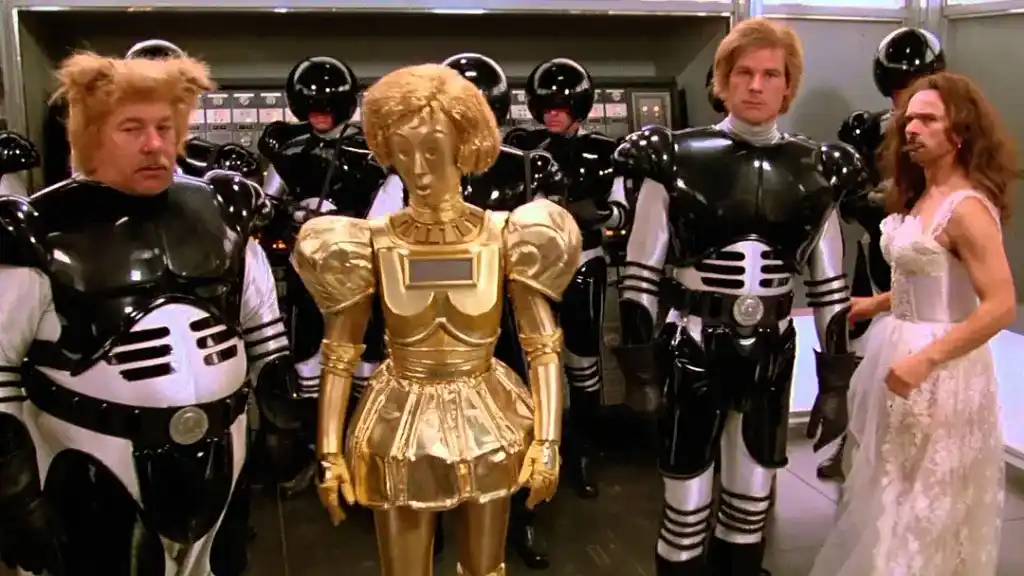
Similarly, the movie Spaceballs repeatedly acknowledges the fact that it is a space movie by, for instance, having the bad guys capture the heroes’ stunt doubles in a chase scene. While this does lean into parody, the humour is based on making the viewer aware of the fact that the story is constructed by a screenwriter and a whole film crew — like all other space opera movies before it.
Parody vs. metafiction
Meanwhile, Scary Movie exaggerates and mocks horror tropes by using jump scares, masked killers, and helpless protagonists, but it never outright reflects on storytelling itself. The jokes depend on recognizing familiar scenes from other films, not on questioning authorship, narrative authority, or the act of watching a story unfold.
In other words, it's a parody of genre conventions, not metafiction about fiction. The film wants you to laugh at horror movies, not necessarily to think about how stories work or why we tell them.
Together, these six characteristics show how metafiction can be playful without becoming a spoof. It works best when it’s in service of something larger than cleverness, encouraging a deeper level of interpretation. Hopefully, this will help you spot the difference between metafiction and other narrative devices — and maybe even make your own writing a bit meta.